
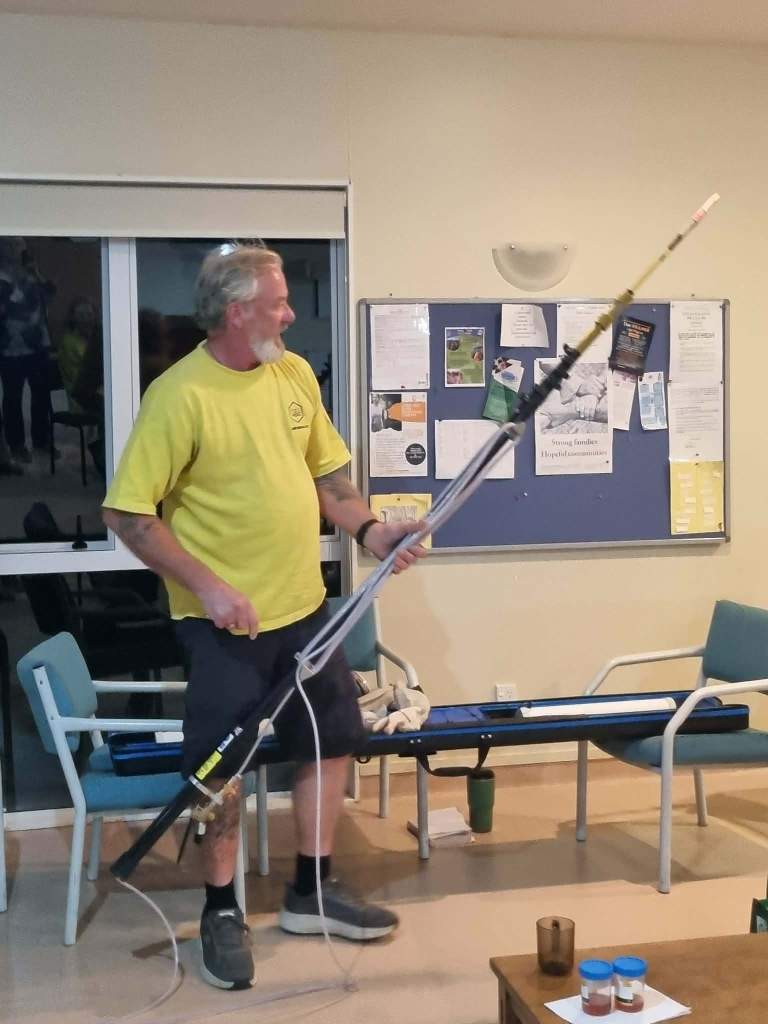
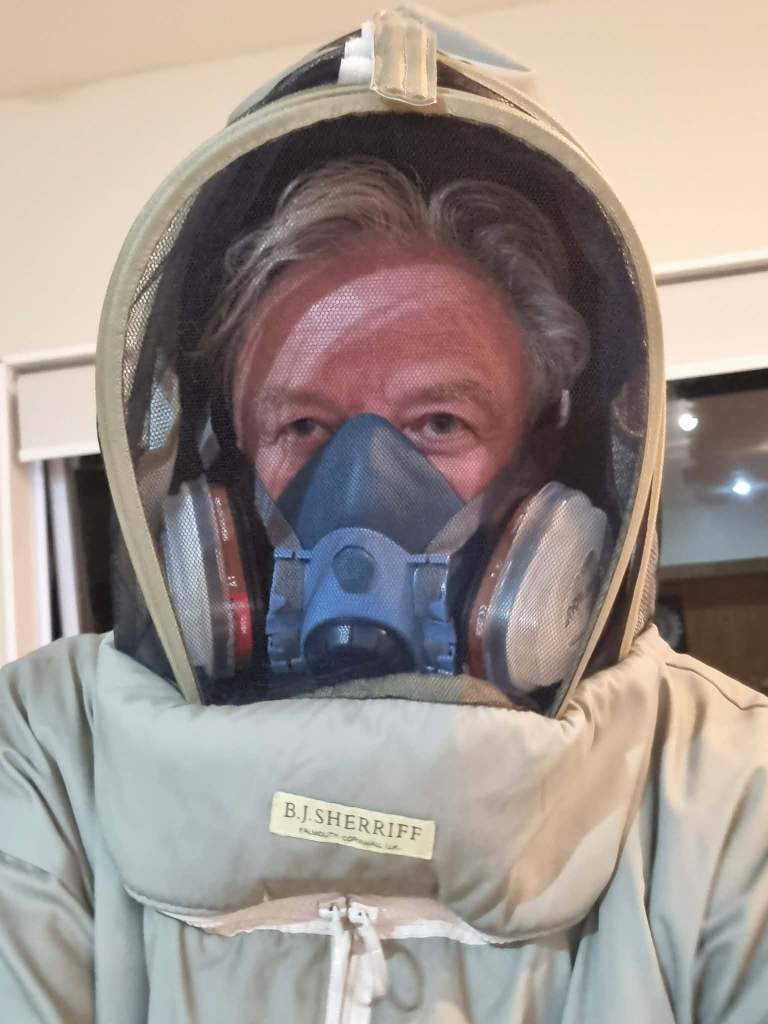
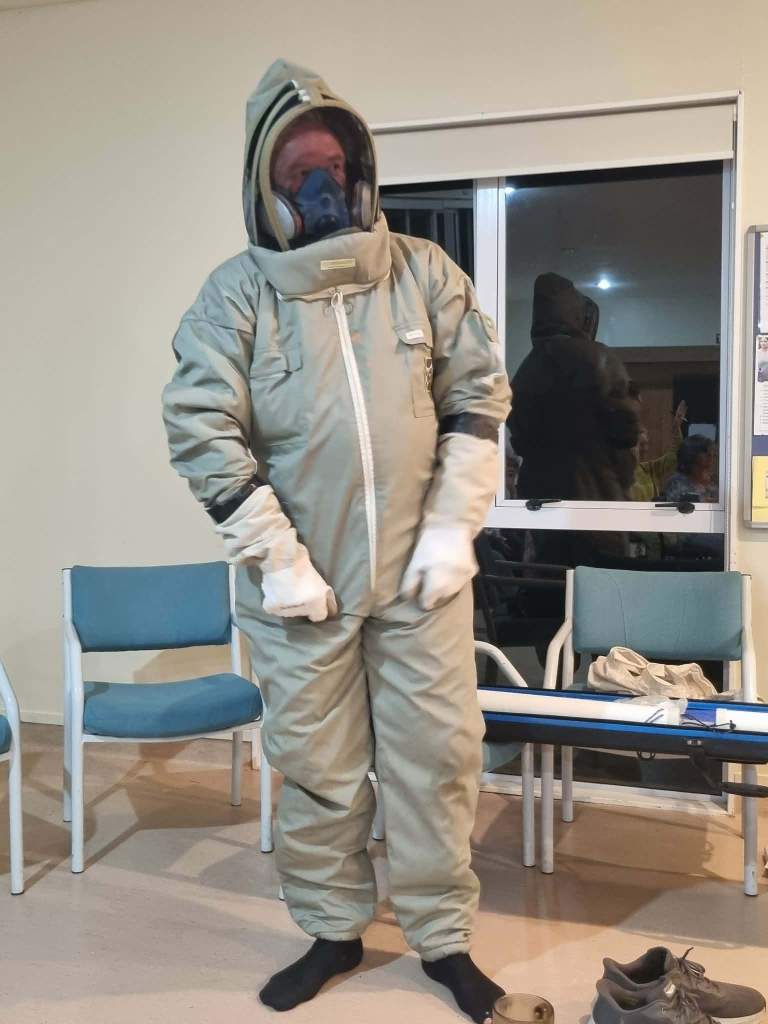
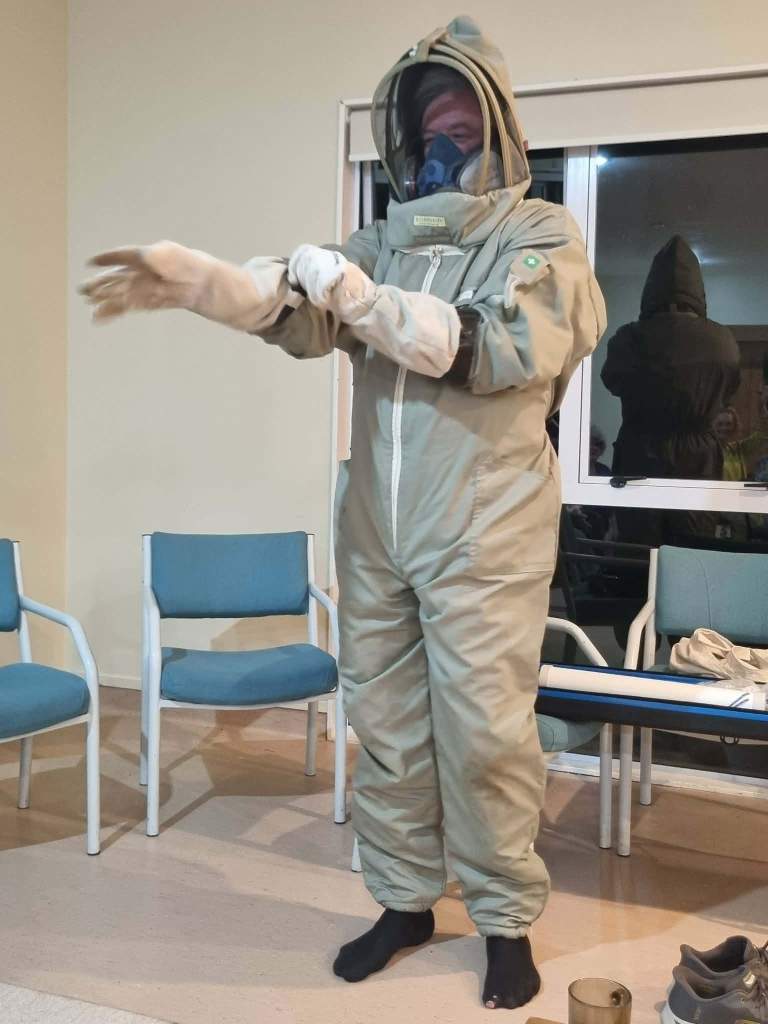
Ken is working with SPS Biota to help eliminate the Yellow Legged Hornets nests. These hornets are more vicious than other pests and special clothing has to be worn.
Yellow Legged Hornets
Here are some photos taken at Wednesday’s meeting. Kim gave us an update on the Yellow Legged Hornet with supporting documents from MPI. More information can bee seen in the minutes.
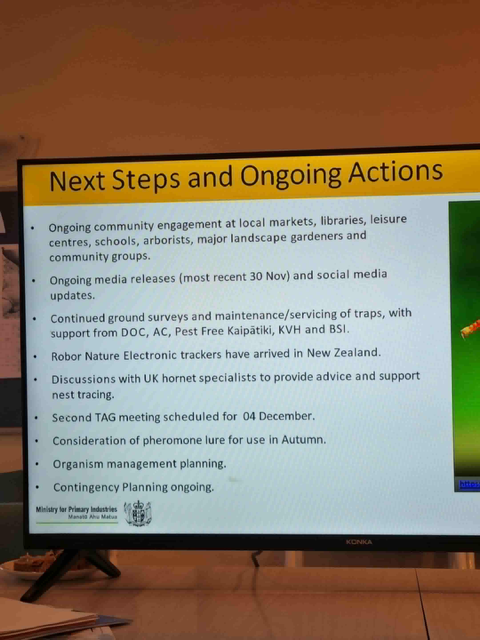
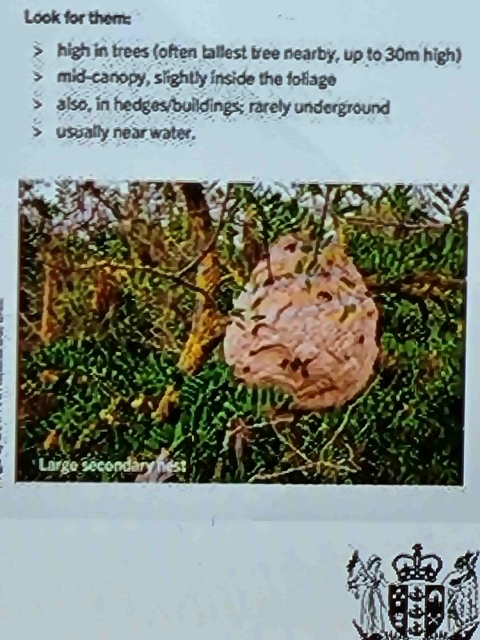
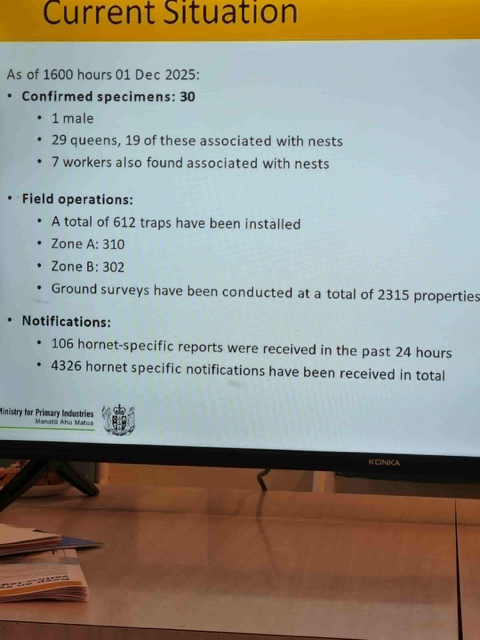
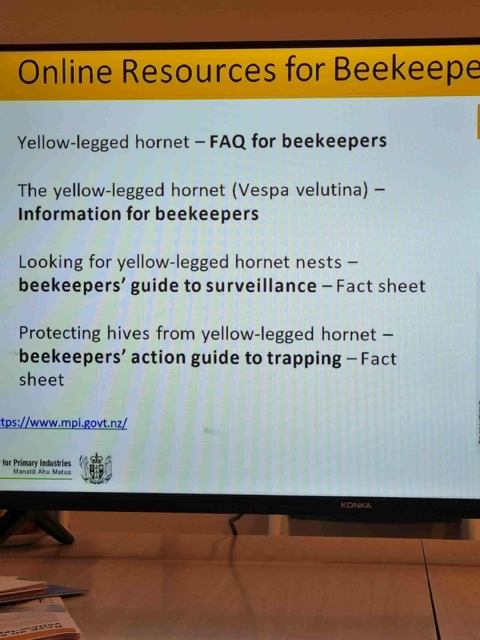
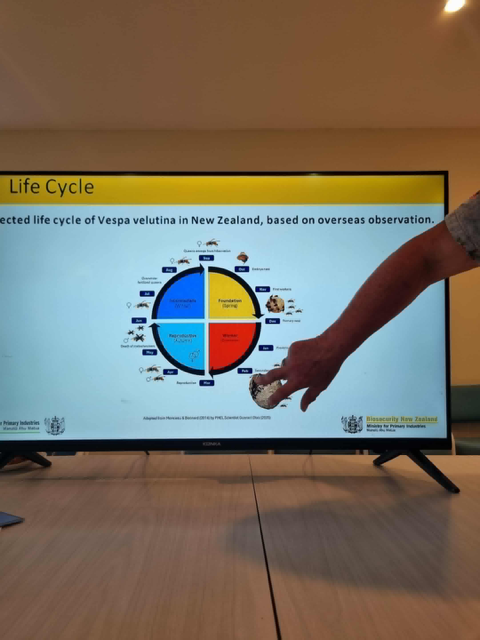
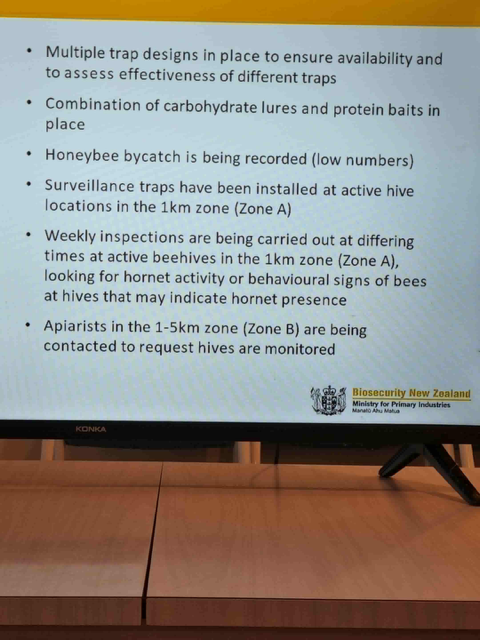
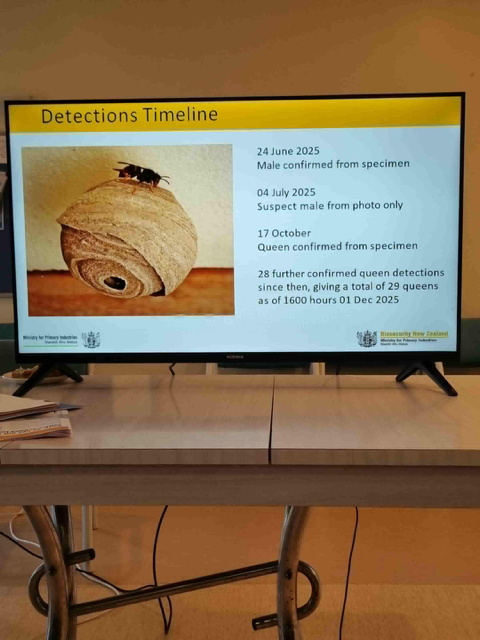
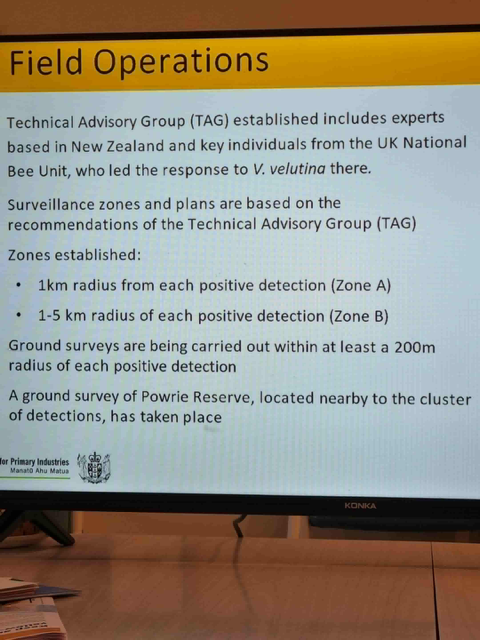


Hornets.
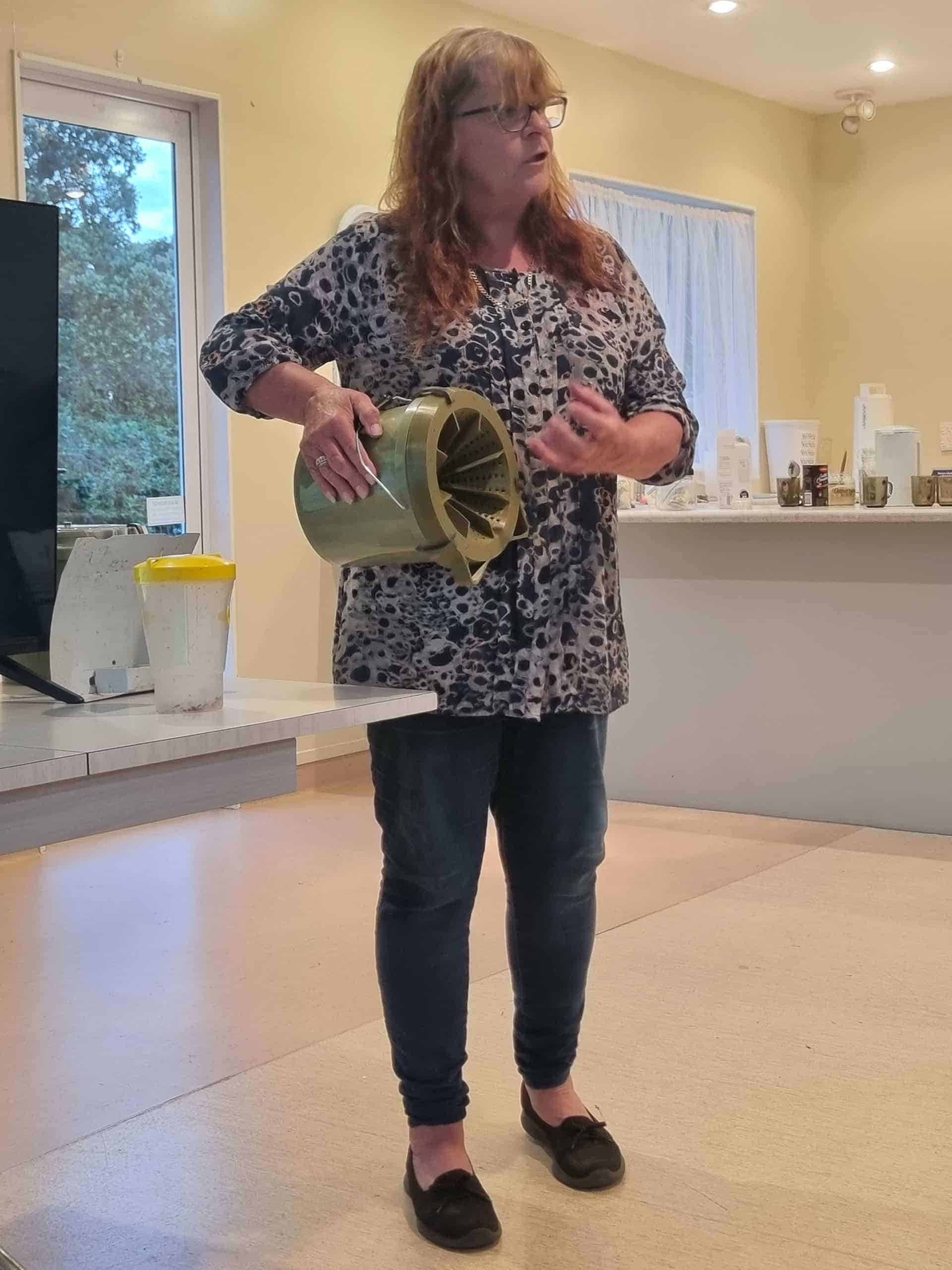
A few photos from Wednesday’s meeting. Kim is holding a new hornet trap.


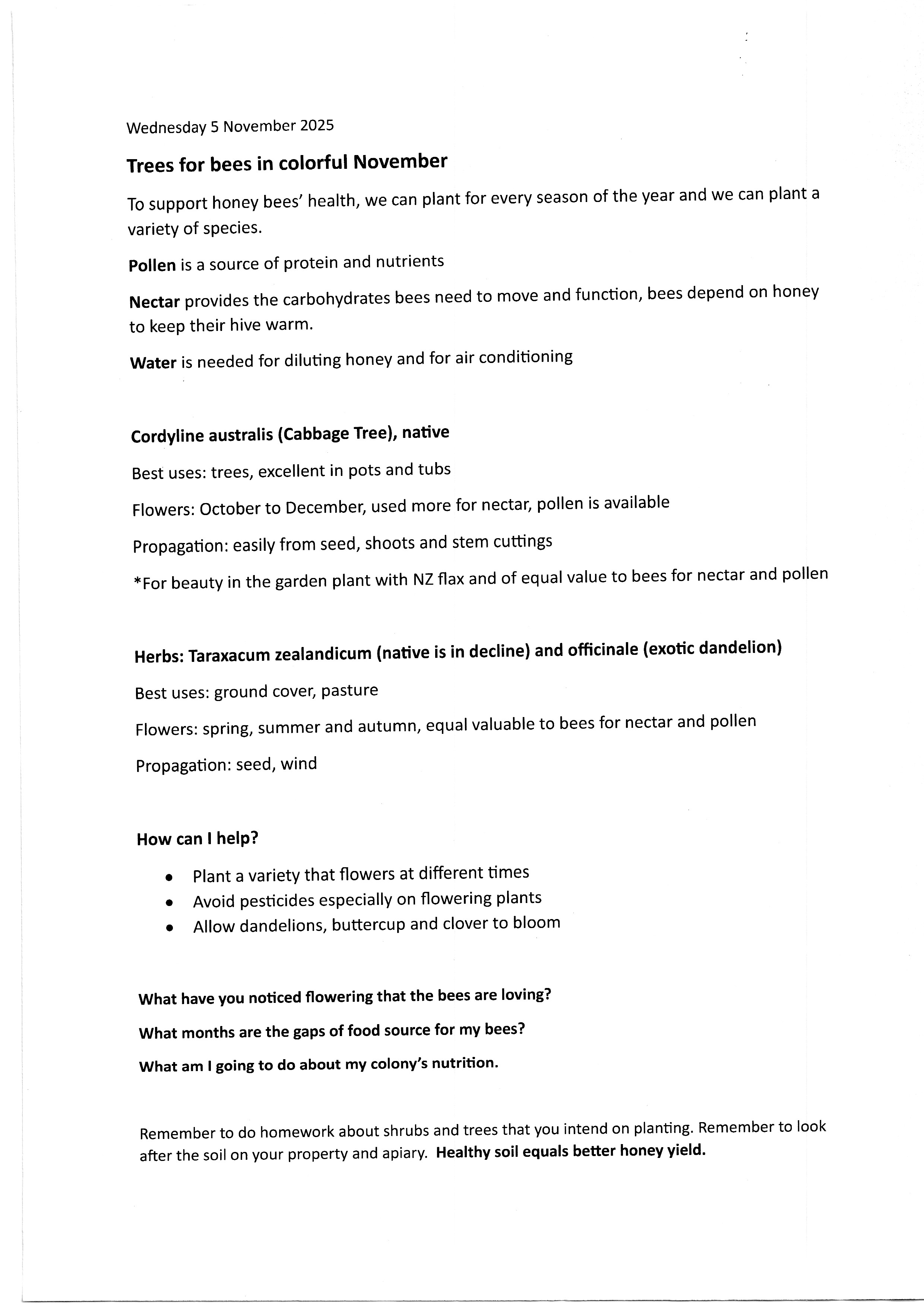
TREES FOR BEES
As summer approaches, the honey flow will soon begin. Linda provided some valuable insights into the plants currently in bloom, and here are her notes. Additionally, a few other members shared what is attracting their bees at the moment: Hawthorn, Lavender, Bottle Brush, French Marigold, Clover, and Manuka.

Dipping.
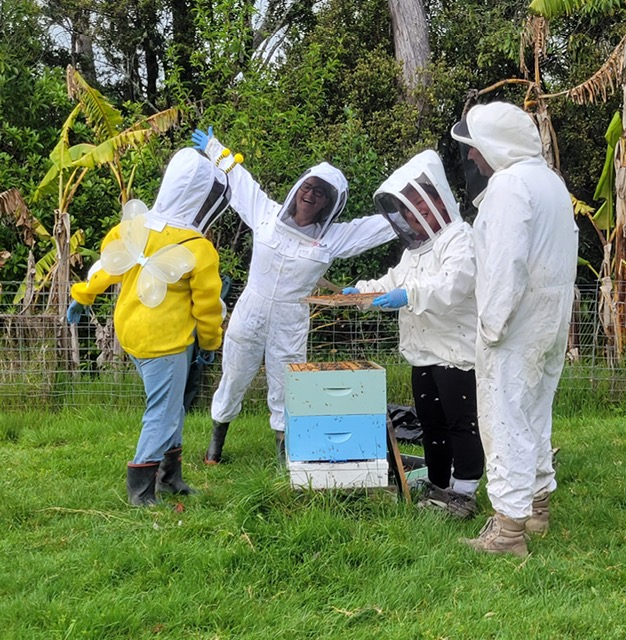
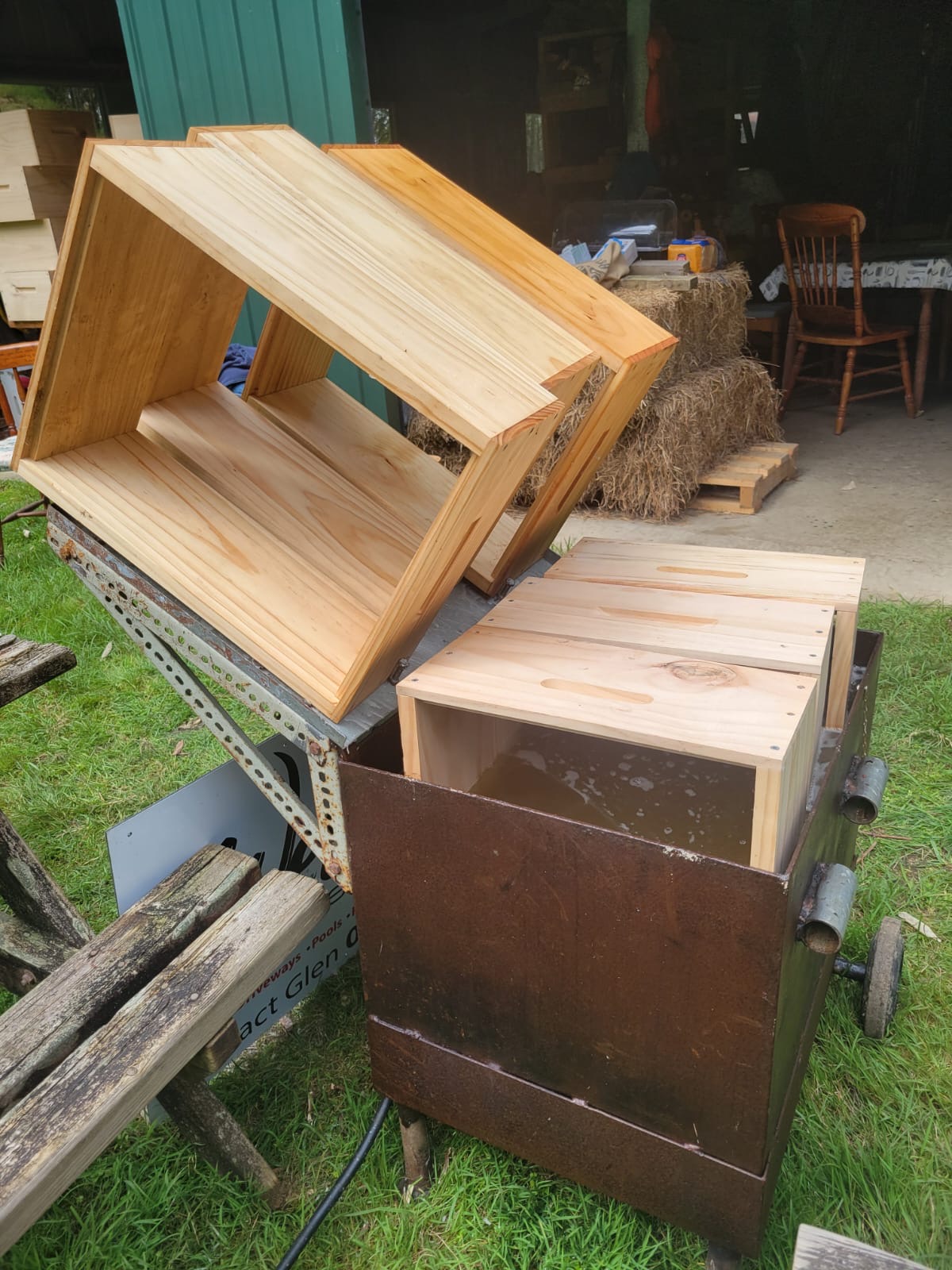
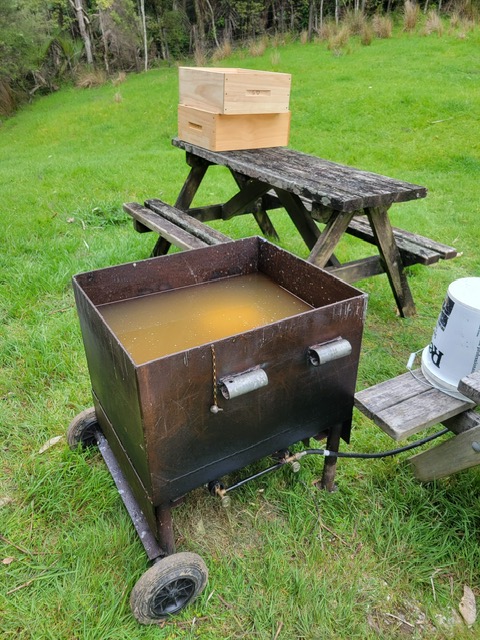
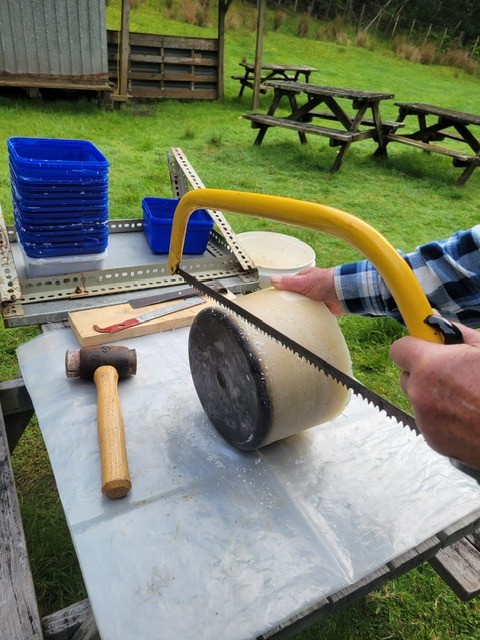
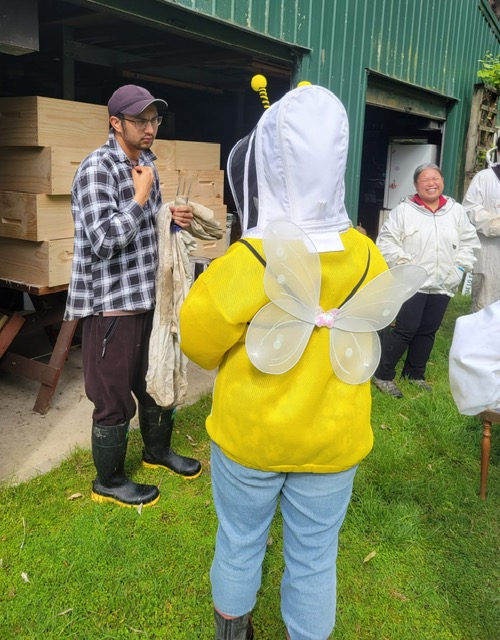
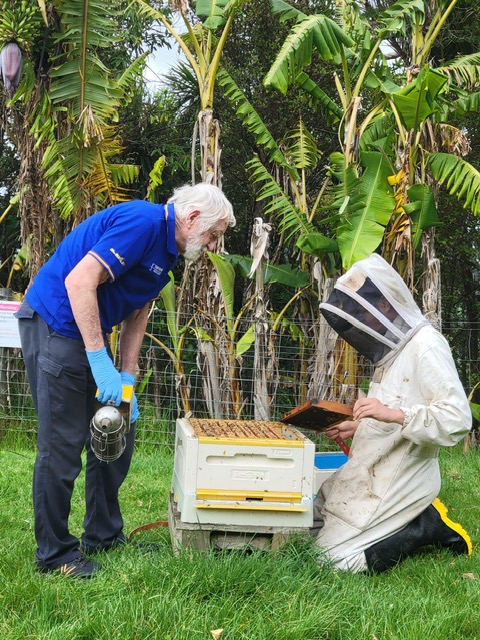
This morning, we checked the club hives. Thanks to our new members for participating. It’s helpful for members to be hands-on and compare to their own hives. Afterwards, we dipped some hivewear in paraffin wax and ended the day with a tasty meal provided by Jo and Bruce. Thank you, it was delicious.
SWARM COLLECTING
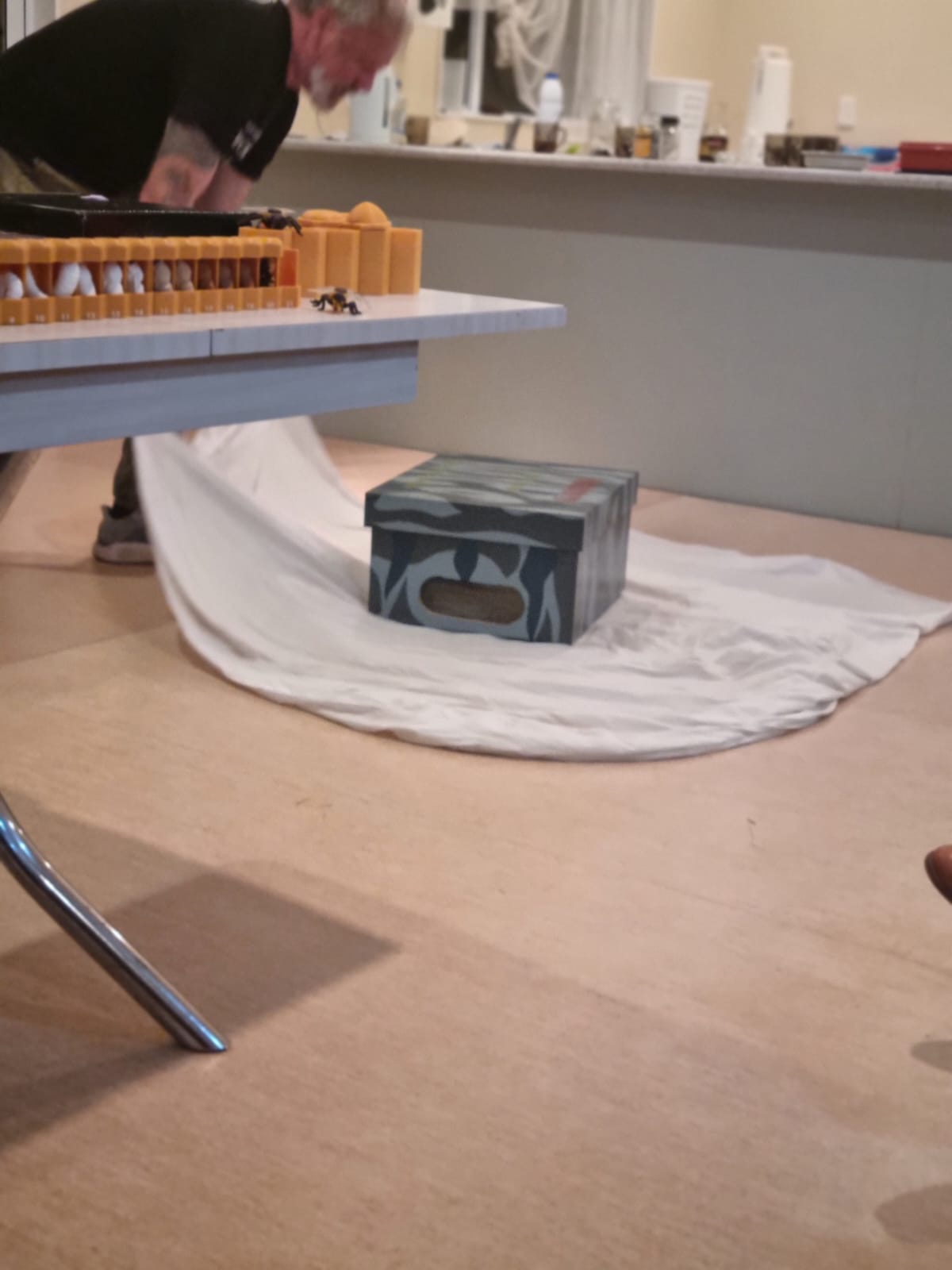
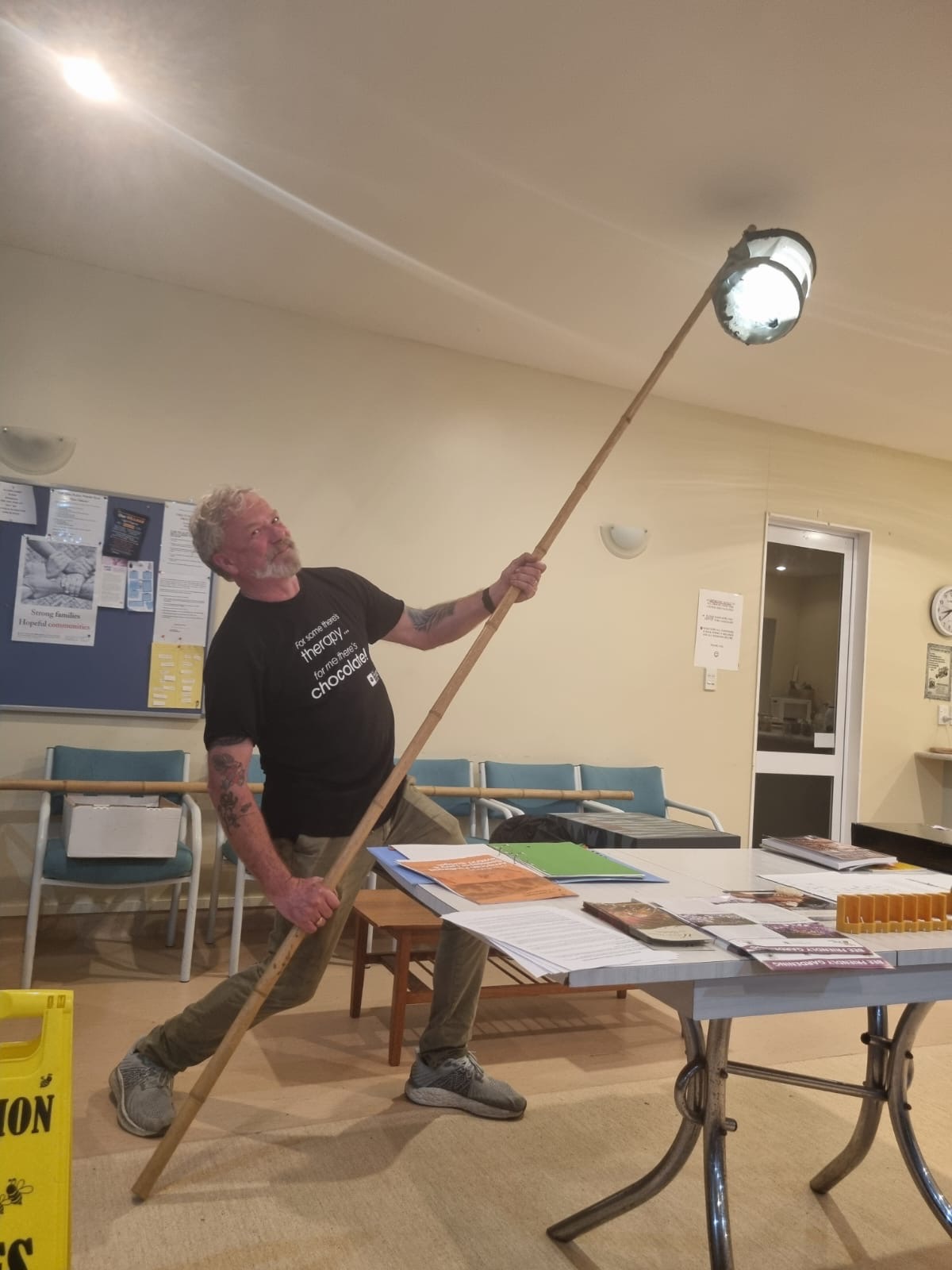
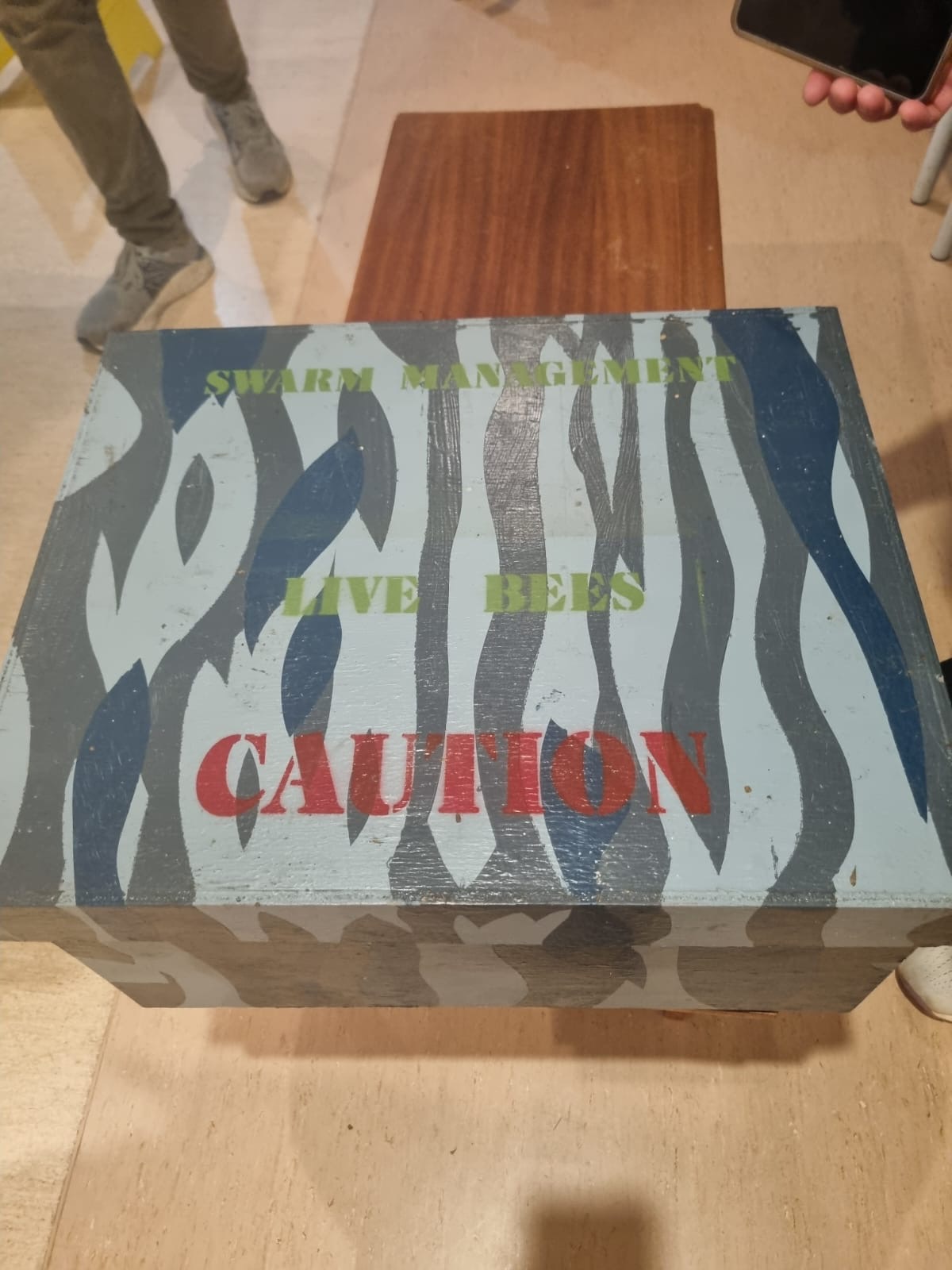
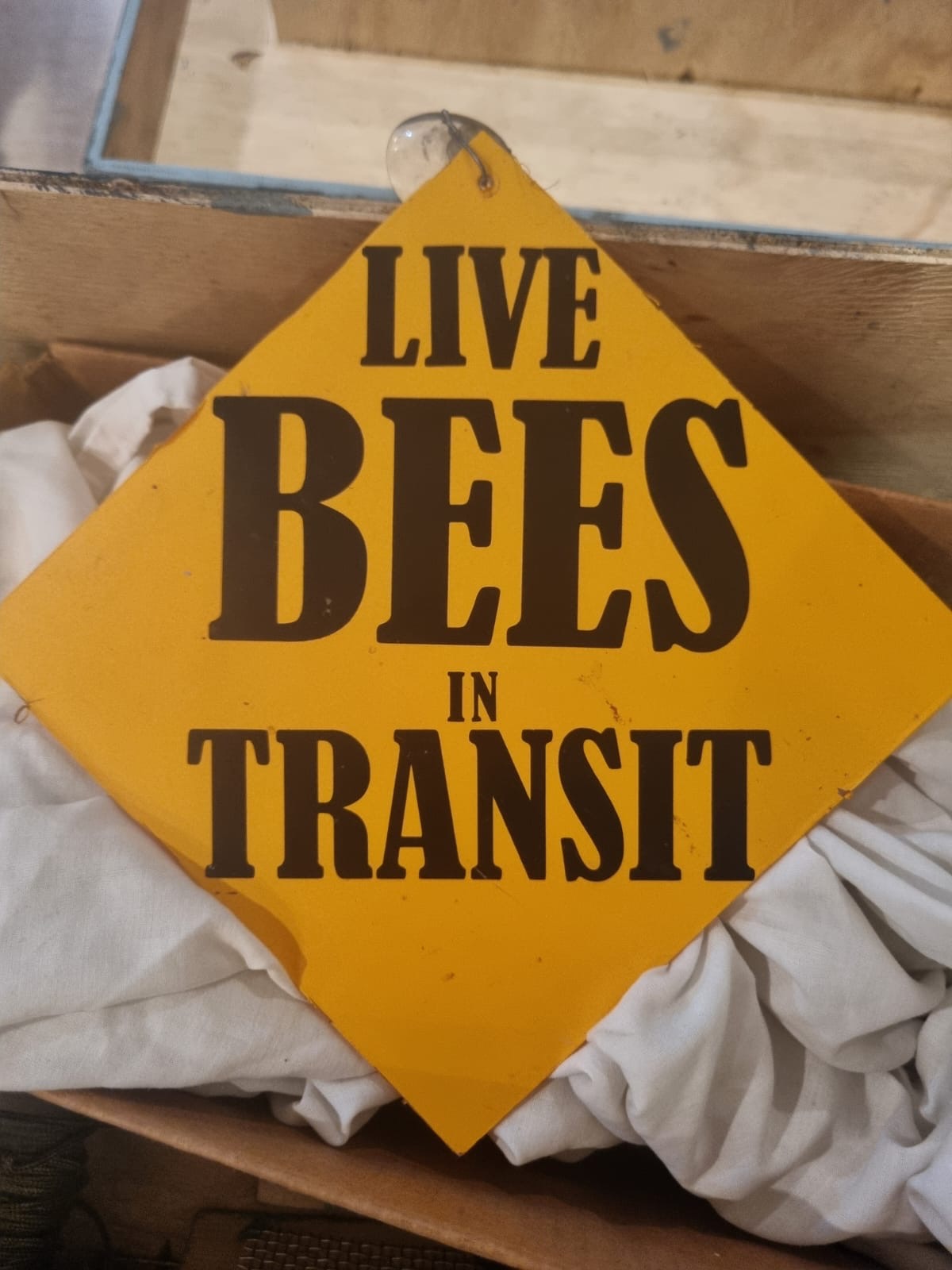
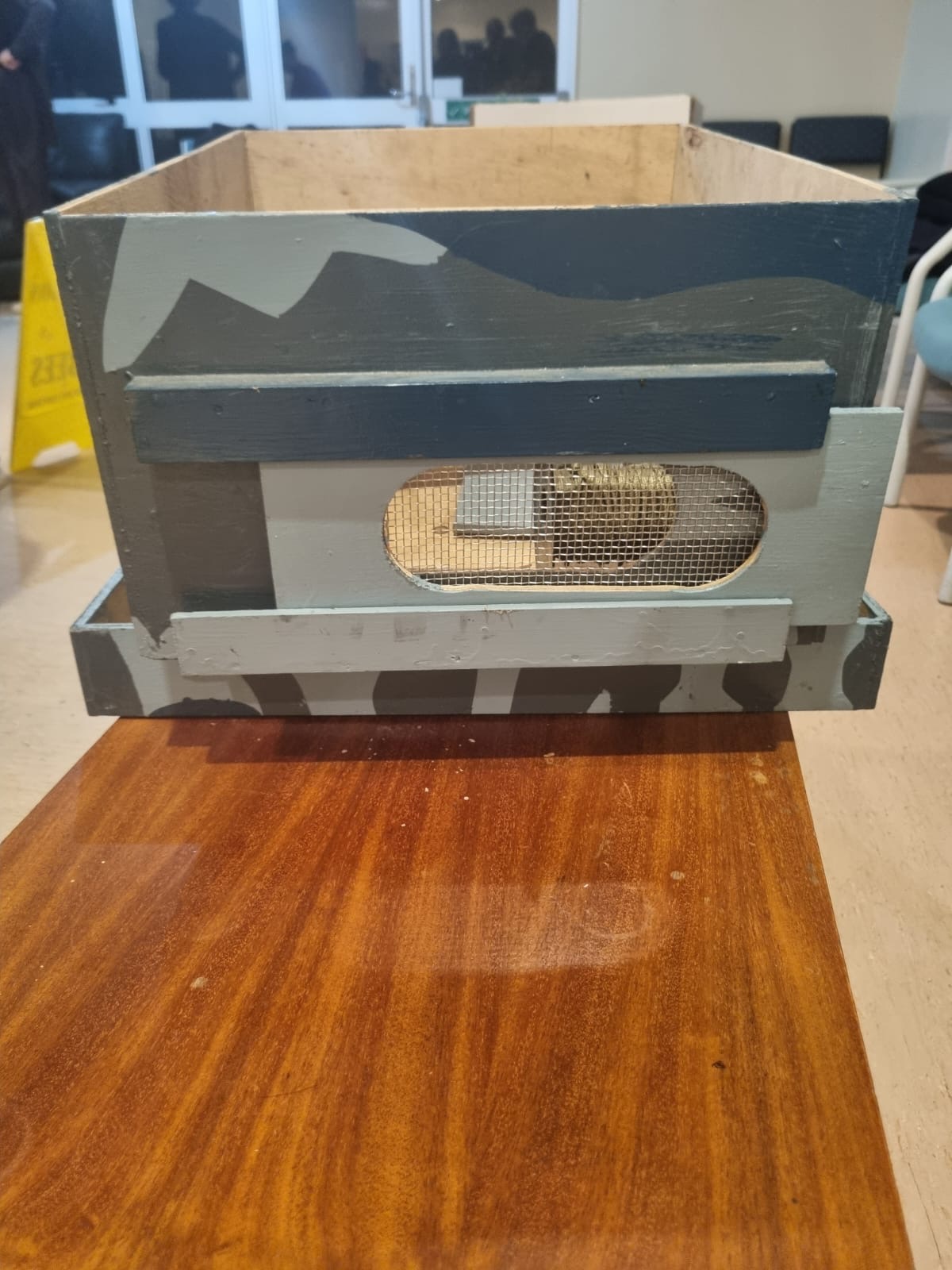
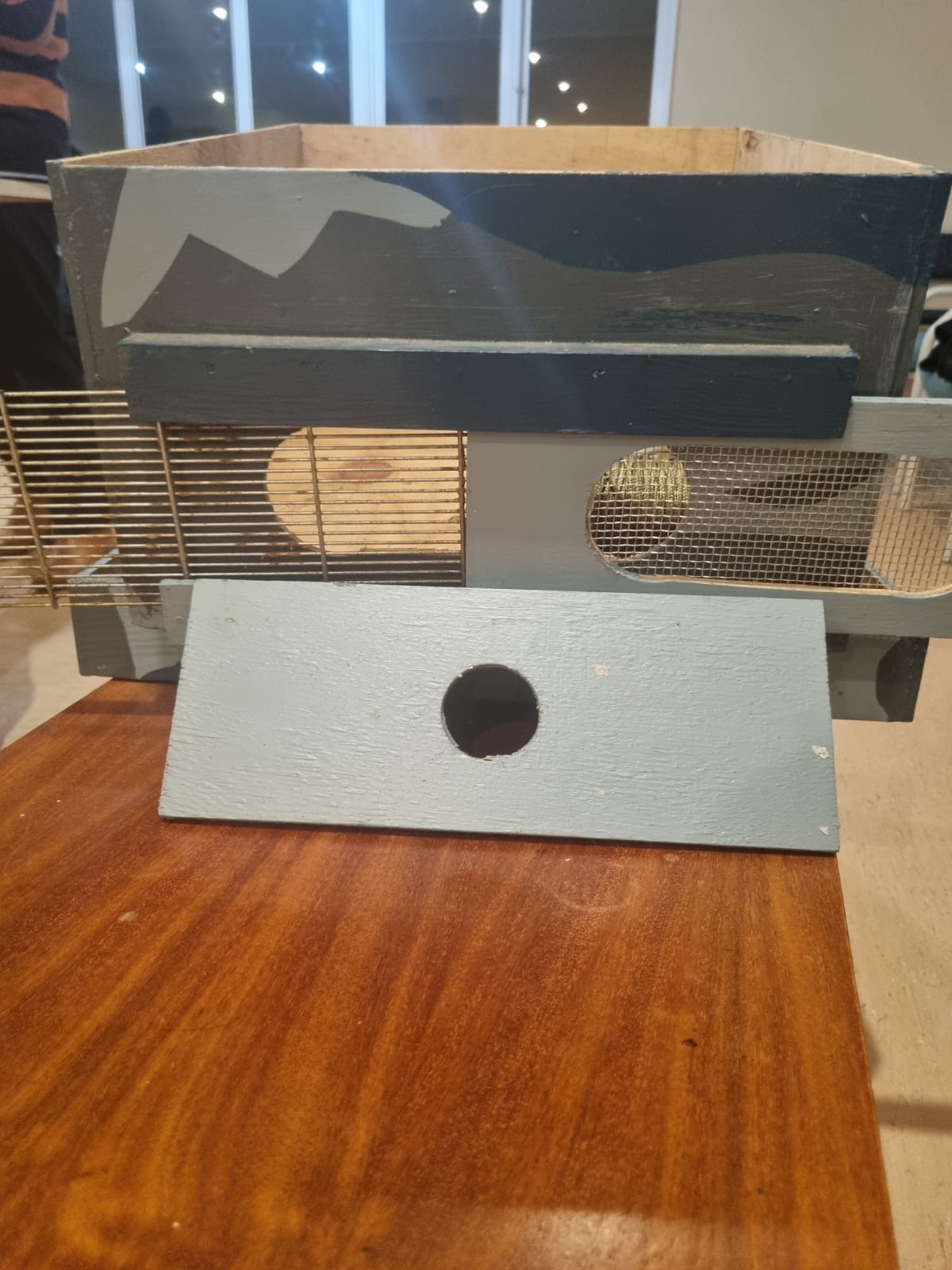
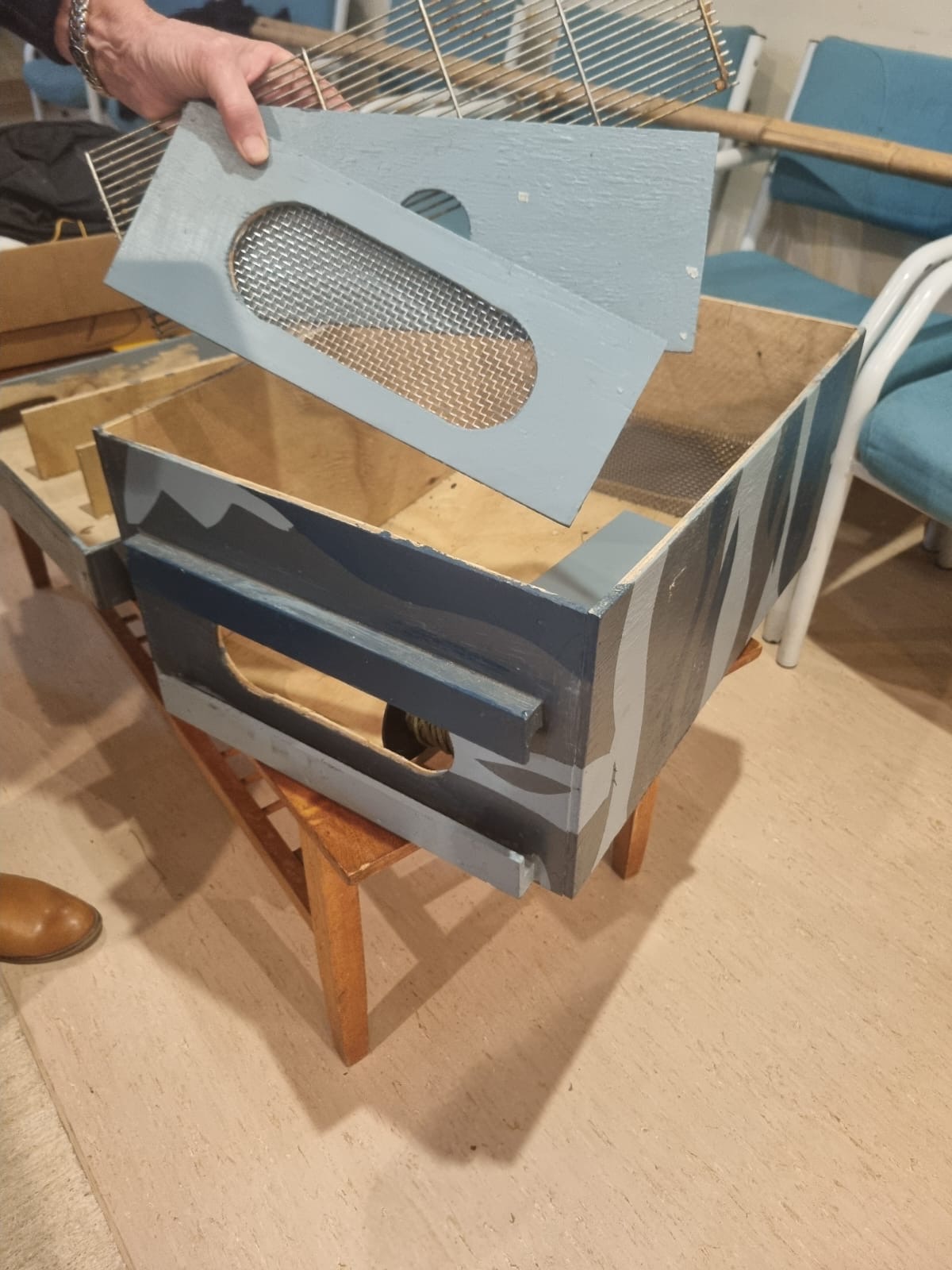
At this months club meeting Ken gave us information on collecting swarms as well as many the inventive ways on how to collect and store bees, which he has discovered over many years of collecting swarms. Here are a few photos but more importantly I have posted some notes he kindly gave me. Please pay particular attention to the AFB section.

TREES FOR BEES
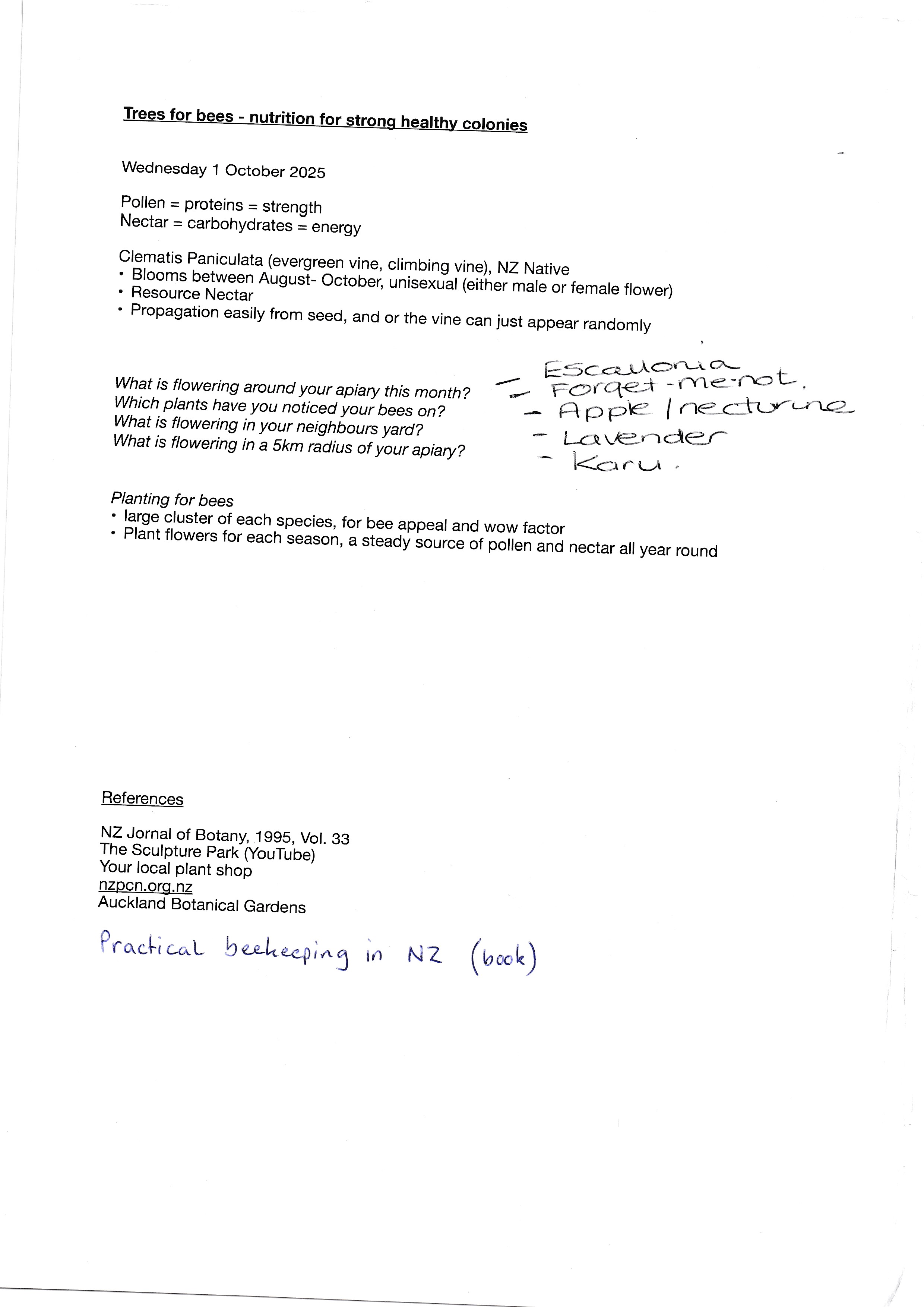
Attached are Linda’s notes from her Trees for Bees talk at Wednesdays meeting.
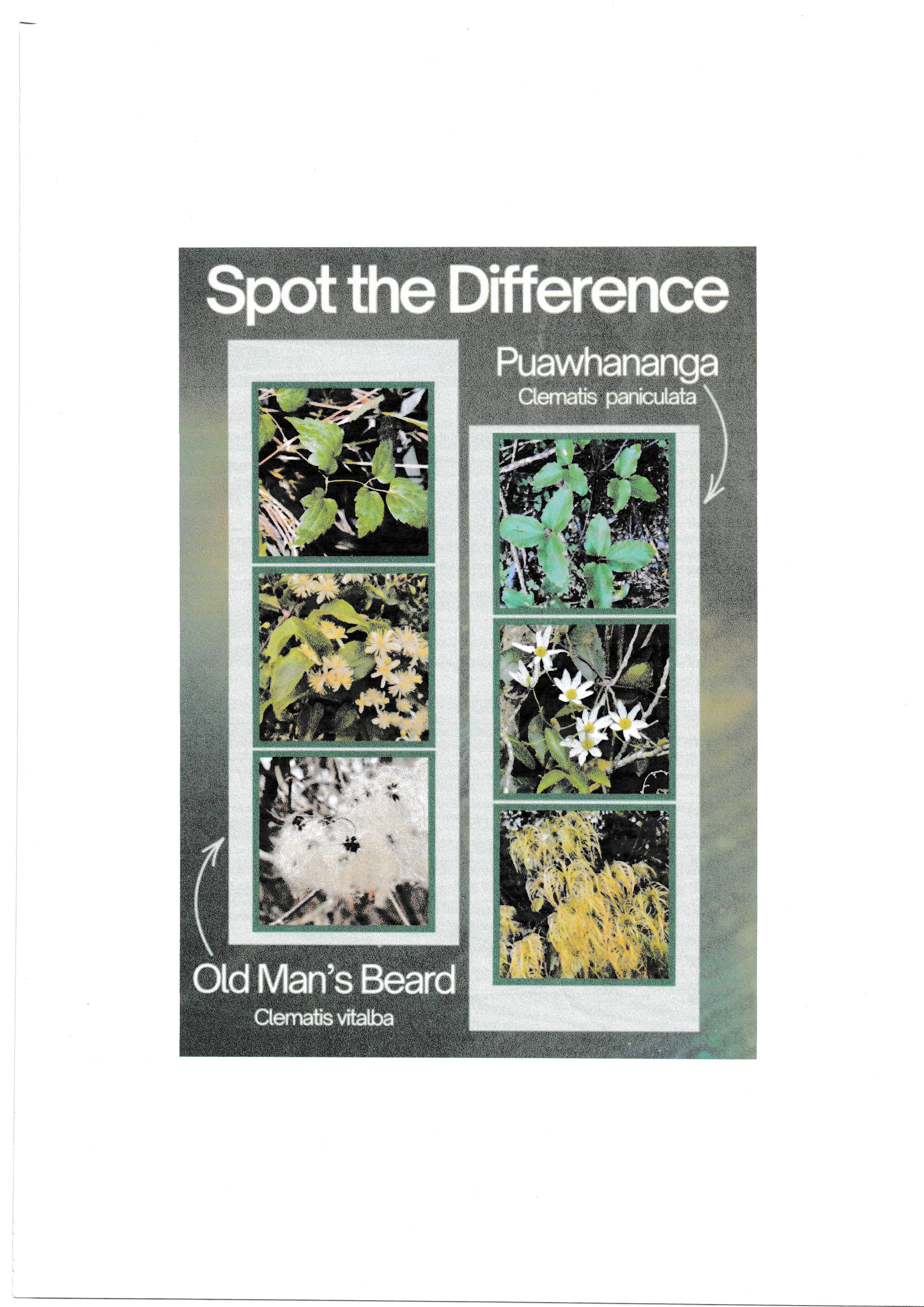
I have also posted a “spot the difference” picture to help tell the difference between Old Man’s Beard and Puawhananga. Old man’s beard (Clematis vitalba) is an invasive, introduced pest vine, whereas Clematis paniculata is a native species.
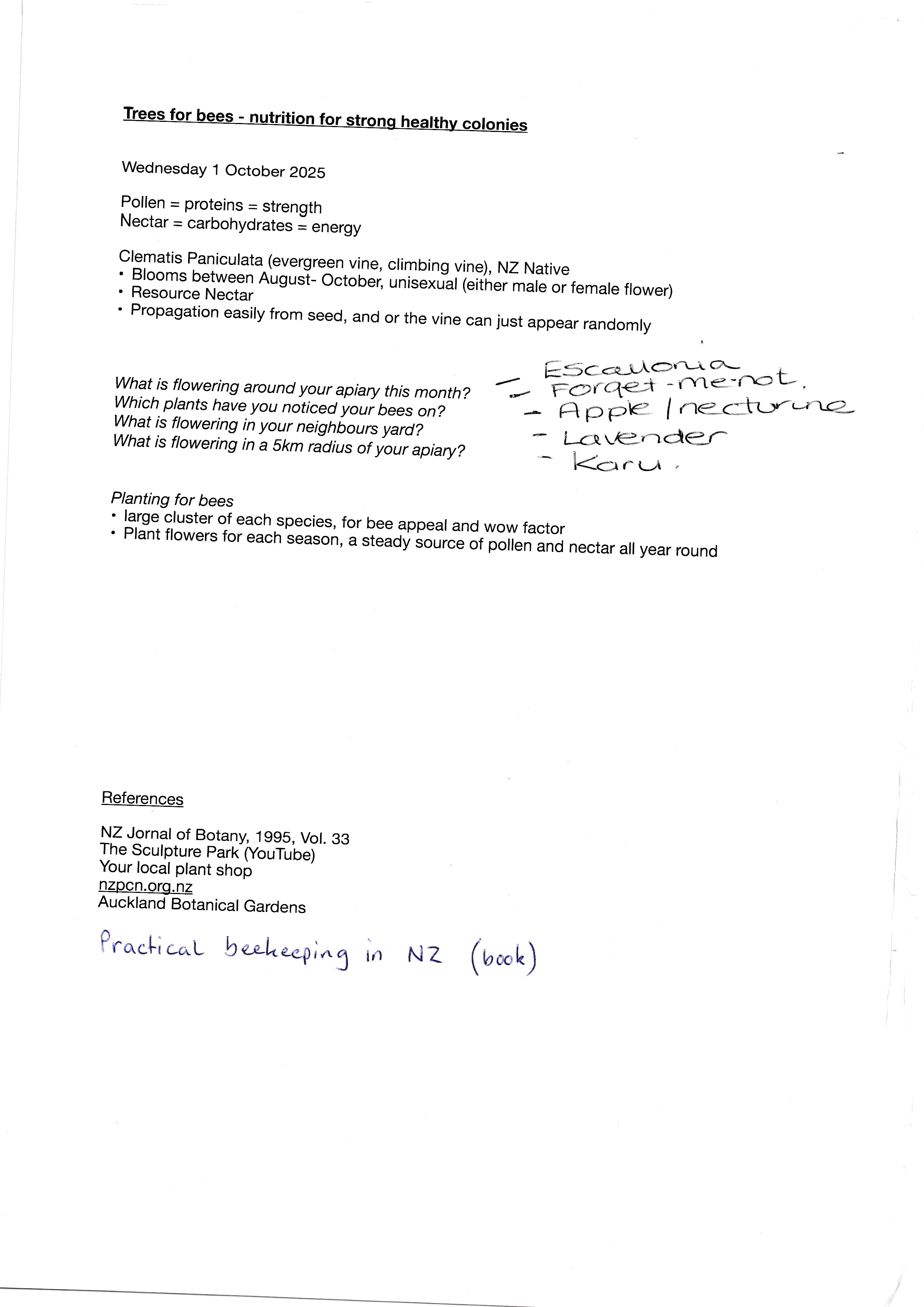
TREES FOR BEES
It is unlikely that Linda will be able to give her talk on Trees for Bees tonight as we have a pretty packed schedule but as always she has prepared notes which she has kindly passed on to be posted. Please enjoy!

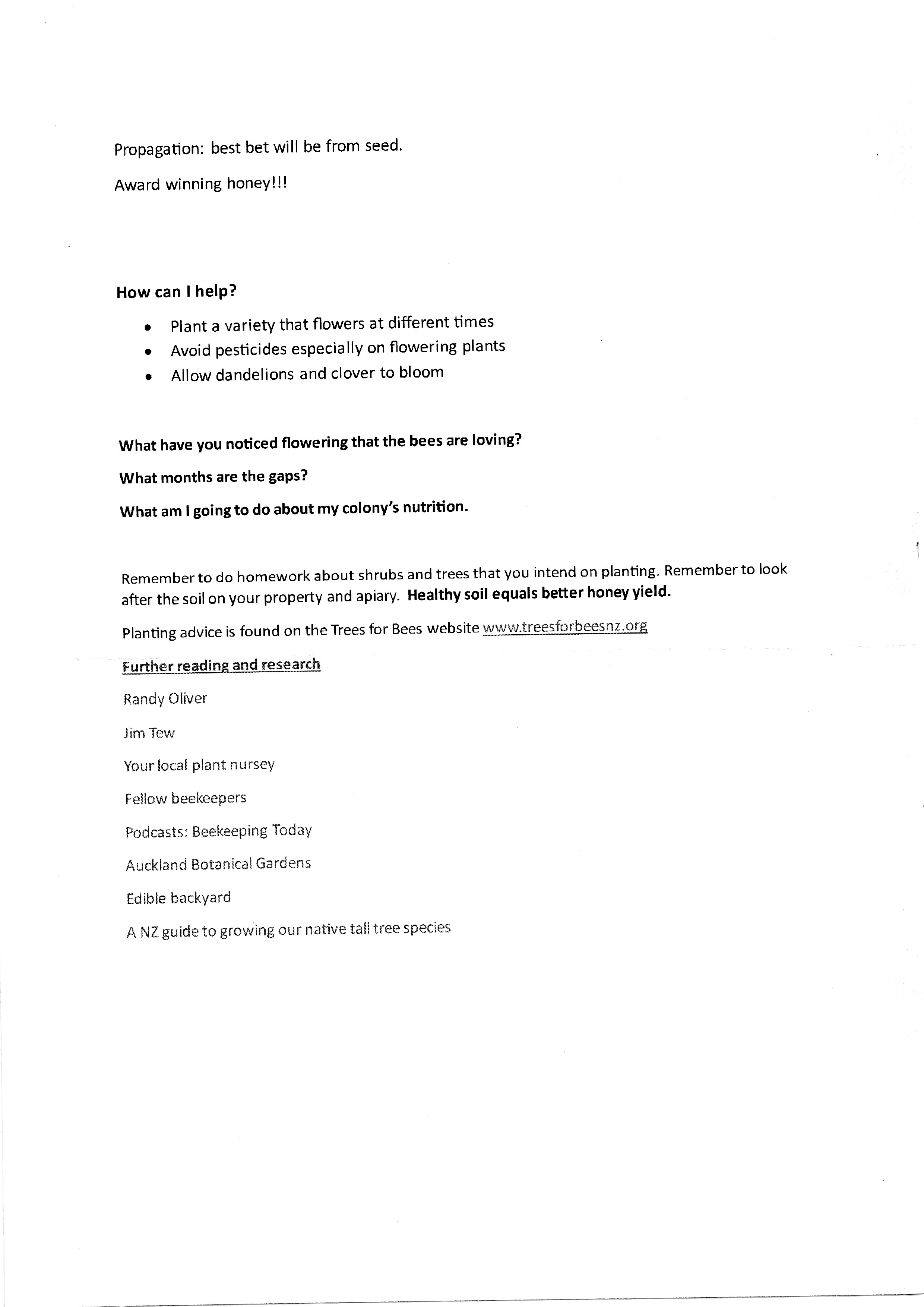
Trees for Bees
We are sorry that you were not able to give your talk on “Trees for Bees” this month Linda. But thank you for giving us your notes to be posted on our blog.
Wednesday 6 August 2025
Trees for bees in majestic August
To support honey bees’ health, we can plant for every season of the year and we can plant a
variety of species.
Pollen is a source of protein and nutrients
Nectar provides the carbohydrates bees need to move and function during cold periods,
bees depend on honey to keep their hive warm.
Golden Wattle (Acacia)
Flowering traditionally in July and August, with bright yellow or cream fluffy balls
A great Pollen source
Sizes are shrubs to trees
Please note: 2024 Department of Conservation NZ named it as a weed because it has been
invasive to NZ native species.
Standing beneath the tall, flowering Golden Wattle, is the majestic humming sounds, of
hundreds of honey bees foraging for food.
Grevillieas (Grevillea)
Robin Hood, Fireworks, bronze ramble are an example of species that flower in August
Nectar for the insects and birds
Ground covers, shrubs and small trees, there are a variety of cultivators and colour
Busy bees, foraging for nectar on the driveway banks, of the low growing Grevillea, Bronze
Rambler.
Lavender (Lavandula)
Dentata, The Princess are flowering at present
Nectar source for bumble bees too
Grow as shrubs, hedges, tapestry bank cover, using different cultivators and colour
NZ Natives
Akeake (Dodonea Viscosa) bushy 5 m shrub/tree: pollen and nectar
Karamu (Coprosma Robusta) 4 m tree: pollen and nectar
Rewarewa, NZ honeysuckle (Knightia excelsa) Tall 30 m: rich in nectar
How can I help?
Plant a variety that flowers at different times
Avoid pesticides especially on flowering plants
Allow dandelions and clover to bloom in winter
What is flowering on your bee site (Apiary) at the moment?
What months are the gaps?
What am I going to do about my colony’s nutrition.
Remember to do homework about shrubs and trees that you intend on planting. Remember to look
after the soil on your property and apiary. Healthy soil equals better honey yield.
Planting advice is found on the Trees for Bees website http://www.treesforbeesnz.org
Further reading and research
Randy Oliver
Jim Tew
Your local plant nursey
Fellow beekeepers
Podcasts: Beekeeping Today, Two bees in a Podcast
 Rodney Beekeepers Club